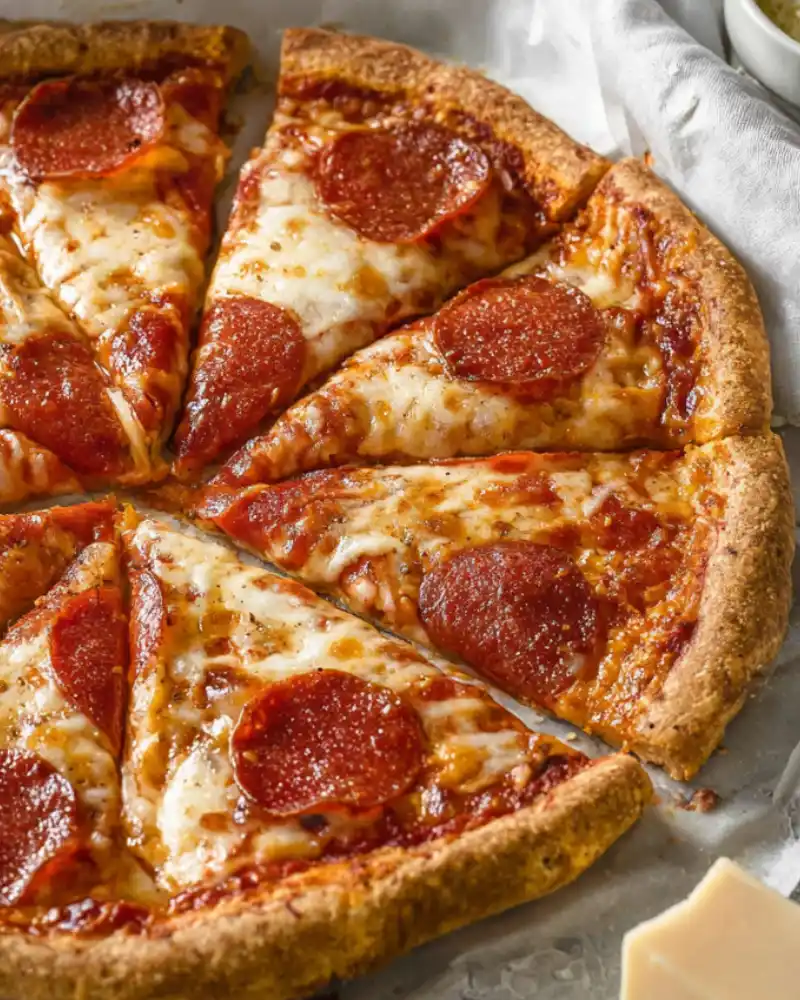
Gluten Free Pizza Crust that’s crispy, flavorful, and totally customizable! 🍕 Craving pizza but avoiding gluten? No worries, this easy recipe saves the day for gluten-free pizza lovers!
Notes on Ingredients
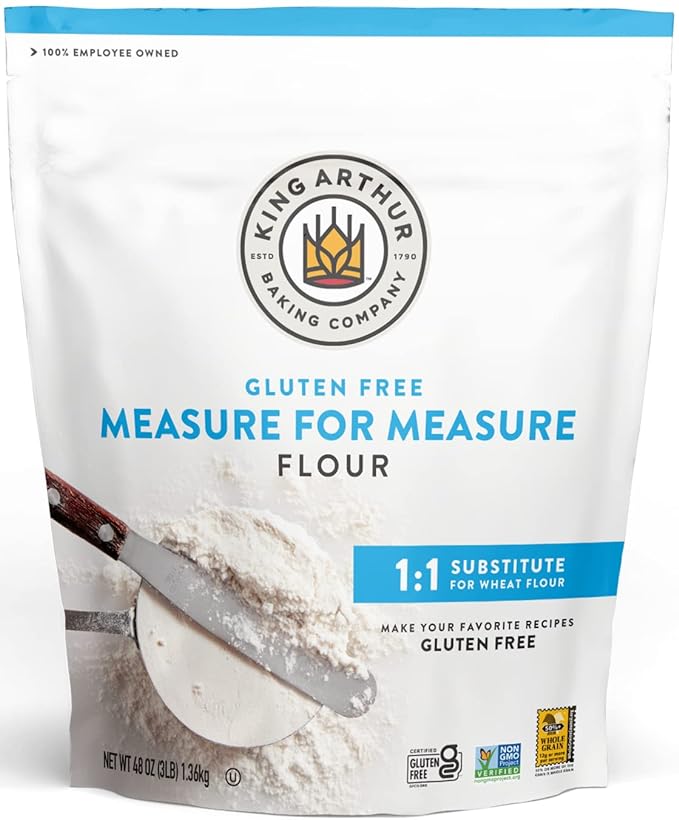
Gluten-Free 1:1 Baking Flour: A cup-for-cup gluten-free blend helps form the base of the crust. Choose one that includes xanthan gum for proper structure and stretch.
Almond Flour: Adds flavor, moisture, and helps prevent a dry or crumbly crust. Use finely ground blanched almond flour for the best results.
Psyllium Husk Powder: Key for elasticity in gluten-free pizza dough. It mimics gluten, giving the crust chew and flexibility. Use finely ground powder only.
Baking Powder: Adds a light lift to keep the crust from becoming dense. Make sure it’s fresh for the best texture.
Instant Yeast: Gives the crust a classic pizza flavor and slight rise. Instant yeast can be mixed directly into the dry ingredients.
How to Make Gluten-Free Pizza Crust
In a glass measuring cup, stir together the warm water, sugar, and yeast. Whisk lightly, then set aside for 5–10 minutes to proof.
In the bowl of a stand mixer fitted with the paddle attachment, combine the gluten-free flour, almond flour, psyllium husk powder, baking powder, and salt.
With the mixer on low speed, slowly pour in the yeast mixture and olive oil. Set the mixer to medium-high and work the dough for approximately 5 minutes. The dough will have the consistency of thick cookie dough; this is expected.
Use a lightly oiled spatula to scrape the sides and bottom of the bowl, mixing once more to ensure everything is incorporated.
Transfer the dough into a prepared baking pan and smooth the surface with damp hands. Cover loosely with plastic wrap coated in oil and let it rise in a warm spot for 45–60 minutes.
Place a pizza stone or steel in the oven and preheat to 425°F.
Line a 12-inch round pizza pan with parchment paper and lightly coat the paper with cooking spray.
With oiled or wet hands, press the dough evenly across the pan. Because the crust will contract slightly in the oven, spread it as thin as possible to cover the surface. Allow the dough to rest for an additional 10 minutes.
Bake the plain crust for 15–20 minutes. Remove from the oven, add your favorite toppings, then carefully slide the pizza off the parchment and pan directly onto the hot stone or steel. Continue baking for another 10–15 minutes, until the cheese is bubbling and everything looks golden.
Take the pizza out, let it cool for about 5 minutes, then slice and serve.
Gluten-Free Pizza Dough Consistency
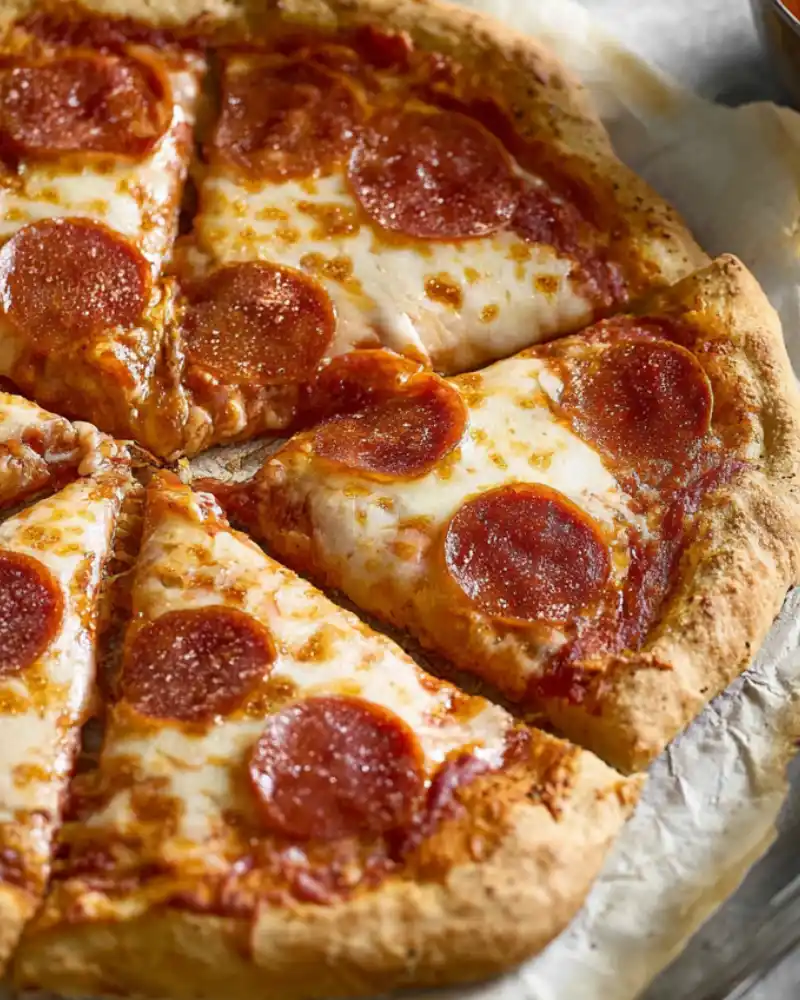
The dough should be thick and sticky, unlike traditional wheat dough. Expect it to resemble cookie dough or thick batter; this is normal.
Using psyllium husk powder helps provide chewiness and structure, compensating for the lack of gluten.
Tips for the Best Gluten-Free Pizza
Measure by weight for best accuracy, especially with gluten-free flours.
Avoid adding extra water; too much liquid can cause an undercooked gum line beneath the toppings.
Parbaking the crust is recommended if you plan on using many toppings or want a crispier base.
Spreading the dough thinly helps avoid excessive thickness, which may lead to a dense texture.
FAQs About Gluten-Free Pizza Crust
If I don’t have a cast-iron skillet, can I use a regular skillet?
Yes, you may use a regular oven-safe skillet or a baking pan lined with parchment. For best results, use pizza stones or steel to mimic pizzeria-style crispiness.
Will this work with Greek yogurt?
Greek yogurt is not included in this recipe’s structure. Substituting it may alter moisture, protein, and binding characteristics, potentially affecting dough consistency and rise. Most gluten-free pizzas do not rely on yogurt; if you wish to experiment, replace small amounts of water with yogurt and monitor results.
Can these be baked in the oven?
Yes, the crust is designed for oven baking, ideally on a pizza stone or steel for even heat and crisp texture.
Do I need to let the dough rise after shaping?
Yes. Allowing the shaped dough to rise before baking hydrates the flours and helps the crust develop structure and flavor. The rise will be moderate, not as much as wheat dough, generally 45–60 minutes after shaping
More gluten-free recipes to make ASAP!
- Gluten-Free Puff Pastry (Ultra Flaky & Golden)
- Gluten-Free Apple Turnovers (Easy, Flaky, Golden)
- Homemade Gluten-Free Pasta (Easy & Fresh)
- Best Gluten-Free Fried Chicken (Better Than KFC!)
You can also FOLLOW ME on Facebook and Pinterest to see more of the delicious food I’m making!
Gluten Free Pizza Crust Recipe
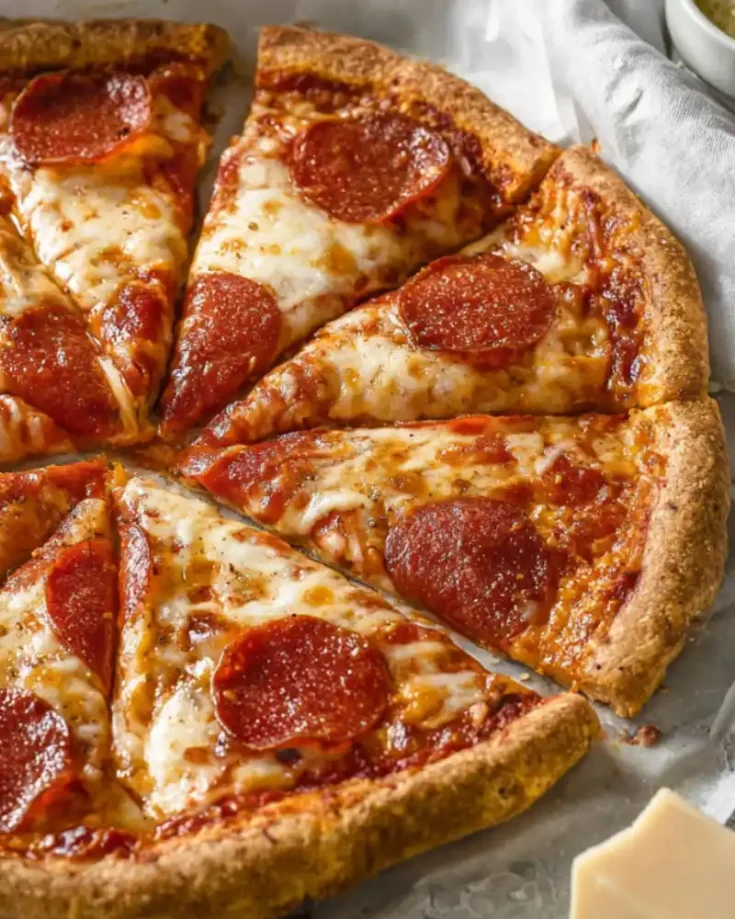
Craving pizza but avoiding gluten? No worries! This Gluten-Free Pizza Crust is here to save the day! 🌟 It's crispy, flavorful, and customizable!
Ingredients
Yeast Mixture:
- 1 cup warm water
- 1 tablespoon sugar
- 1 1/2 teaspoons instant yeast
Other Ingredients:
- 1 1/2 cups gluten-free measure-for-measure flour (225g)
- 1/4 cup almond flour
- 1 tablespoon psyllium husk powder
- 1 teaspoon baking powder
- 3/4 teaspoon salt
- 2 tablespoons olive oil
Instructions
- In a glass measuring cup, stir together the warm water, sugar, and yeast. Whisk lightly, then set aside for 5–10 minutes to proof.
- In the bowl of a stand mixer fitted with the paddle attachment, combine the gluten-free flour, almond flour, psyllium husk powder, baking powder, and salt.
- With the mixer on low speed, slowly pour in the yeast mixture and olive oil. Set the mixer to medium-high and work the dough for approximately 5 minutes. The dough will have the consistency of thick cookie dough; this is expected.
- Use a lightly oiled spatula to scrape the sides and bottom of the bowl, mixing once more to ensure everything is incorporated.
- Transfer the dough into a prepared baking pan and smooth the surface with damp hands. Cover loosely with plastic wrap coated in oil and let it rise in a warm spot for 45–60 minutes.
- Place a pizza stone or steel in the oven and preheat to 425°F.
- Line a 12-inch round pizza pan with parchment paper and lightly coat the paper with cooking spray.
- With oiled or wet hands, press the dough evenly across the pan. Because the crust will contract slightly in the oven, spread it as thin as possible to cover the surface. Allow the dough to rest for an additional 10 minutes.
- Bake the plain crust for 15–20 minutes.
- Remove the pizza from the oven, add your favorite toppings, then carefully slide it off the parchment and onto the hot stone or steel. Continue baking for another 10–15 minutes, until the cheese is bubbling and everything looks golden.
- Take the pizza out, let it cool for about 5 minutes, then slice and serve.
Notes
The recipe makes 8 servings
Recommended Products
As an Amazon Associate and member of other affiliate programs, I earn from qualifying purchases.
Nutrition Information:
Yield:
8Serving Size:
1Amount Per Serving:Calories: 189Total Fat: 9gSaturated Fat: 3gTrans Fat: 0gUnsaturated Fat: 5gCholesterol: 32mgSodium: 524mgCarbohydrates: 24gFiber: 4gSugar: 2gProtein: 9g

I’m not sure what measure for measure means for the flour?
Measure for measure’ means you can use the gluten-free flour in the same amount as regular flour, cup for cup. So if the recipe calls for 1 cup of all-purpose flour, you’d use 1 cup of the gluten-free blend.
King Arthur GF flour blend is called measure for measure and is pictured below the recipe.
what purpose does the almond flour serve?
Substitute for Psyllium Husk Powder?
You can substitute psyllium husk powder with chia seeds, flax seeds, or xanthan gum in baking for binding, using a 1:1 ratio for seeds, or less xanthan gum (e.g., 1 tsp for 1/4 cup psyllium) for thickening; for laxative effects, try prunes or flaxseed, while starches like arrowroot or tapioca work for thickening soups/sauces, always adjusting for liquid and recipe needs.
Can substitute for almond four?
Do you need the stone? Substitute?
Do you need to use sugar? Can I use honey or monk fruit or none?
I’m allergic to almonds. What can I use instead?